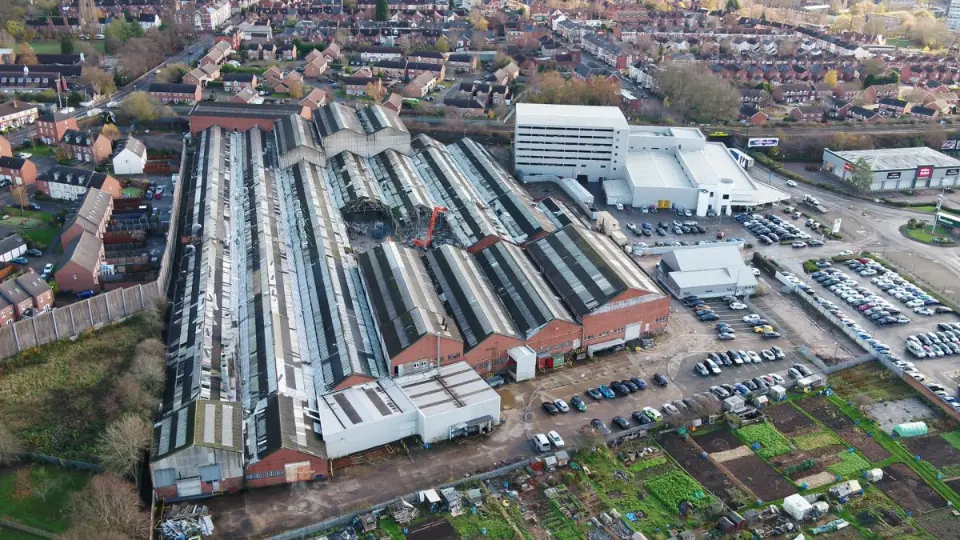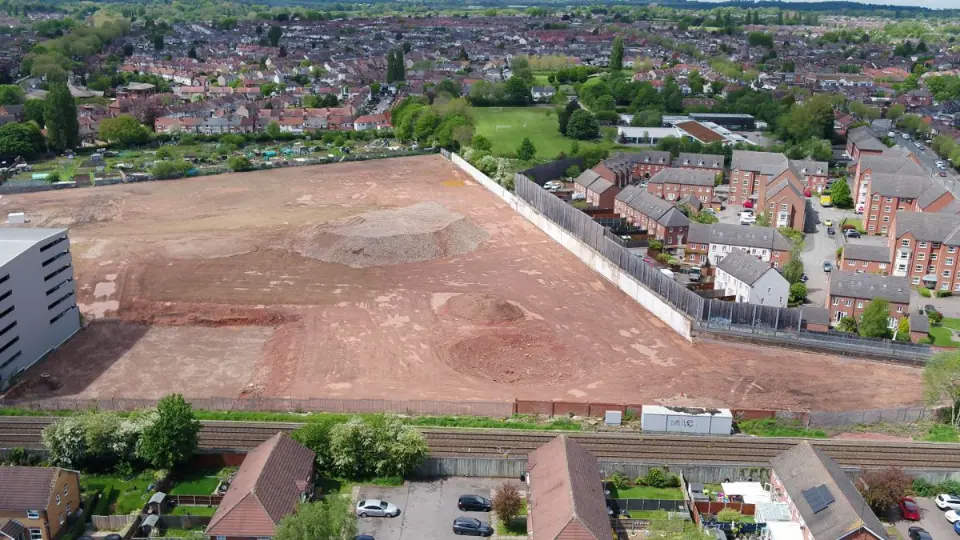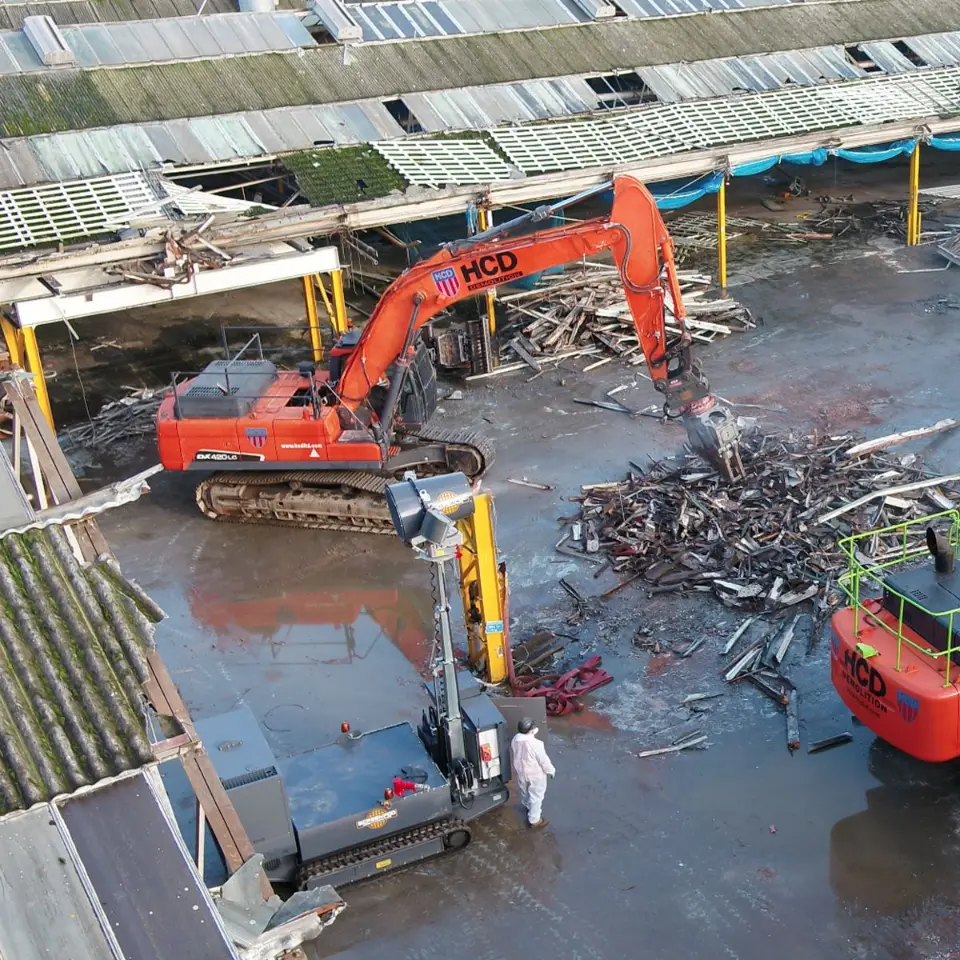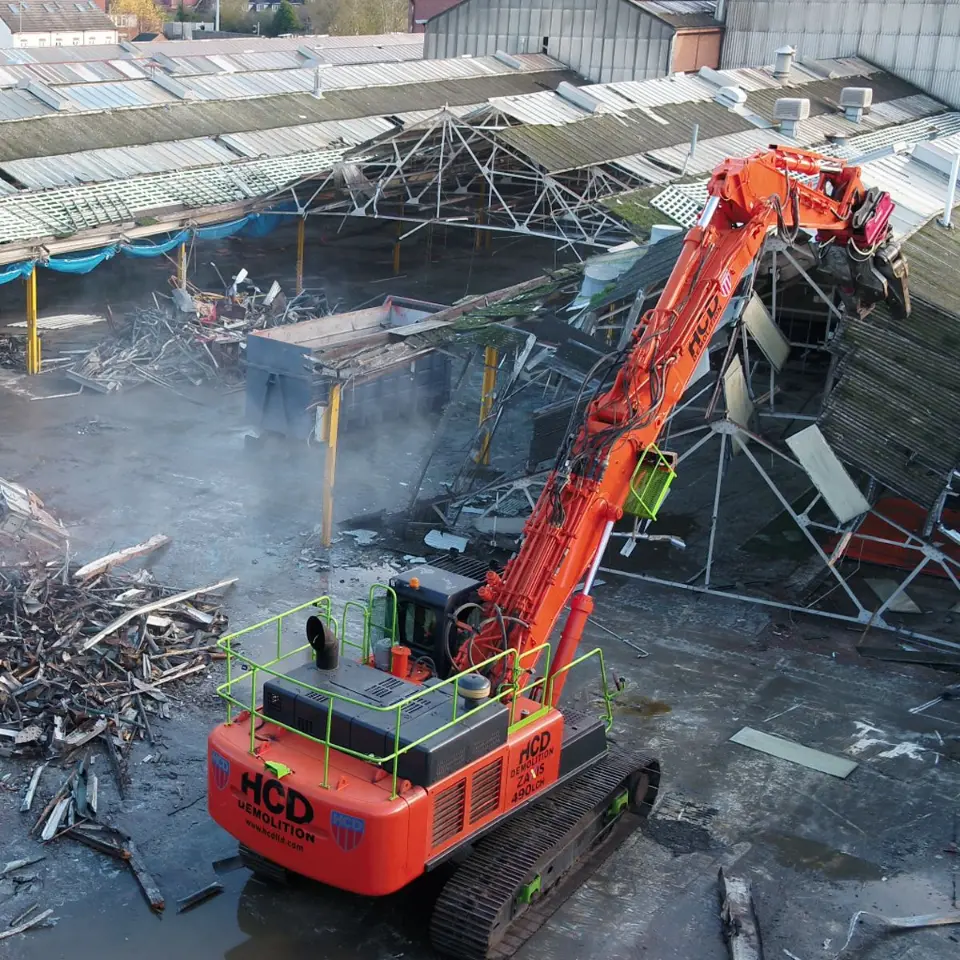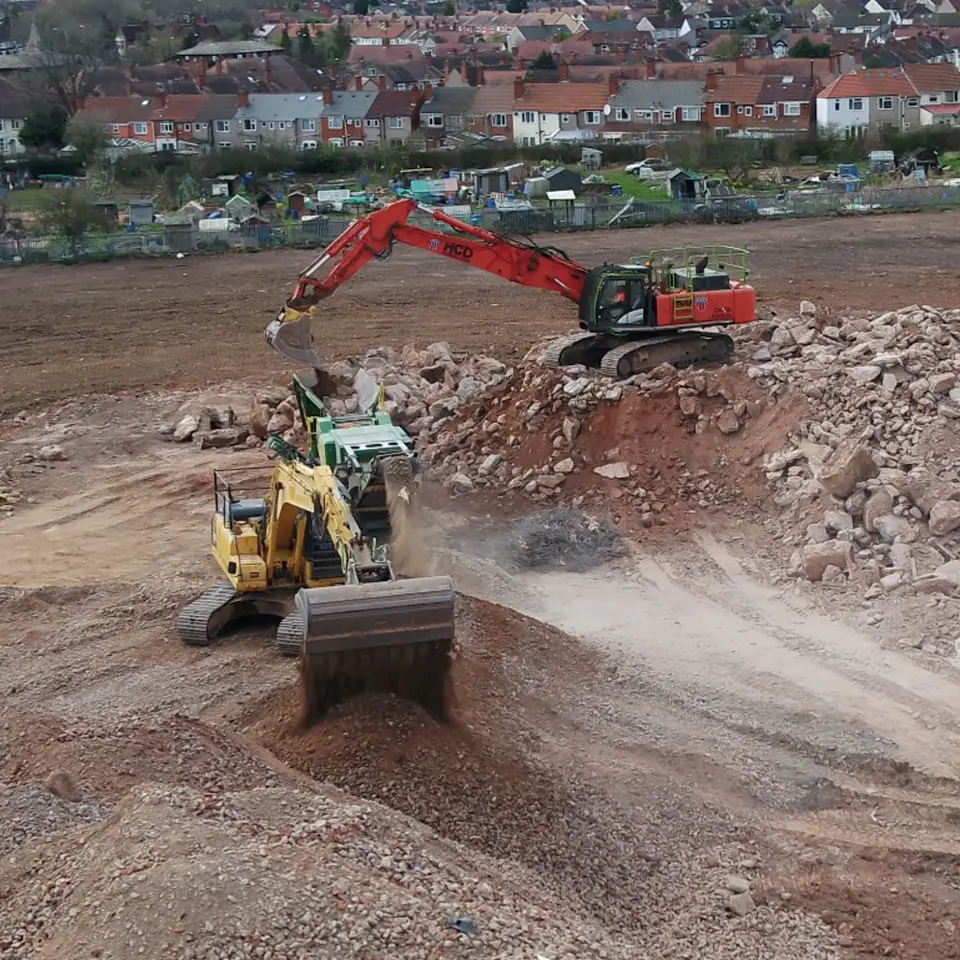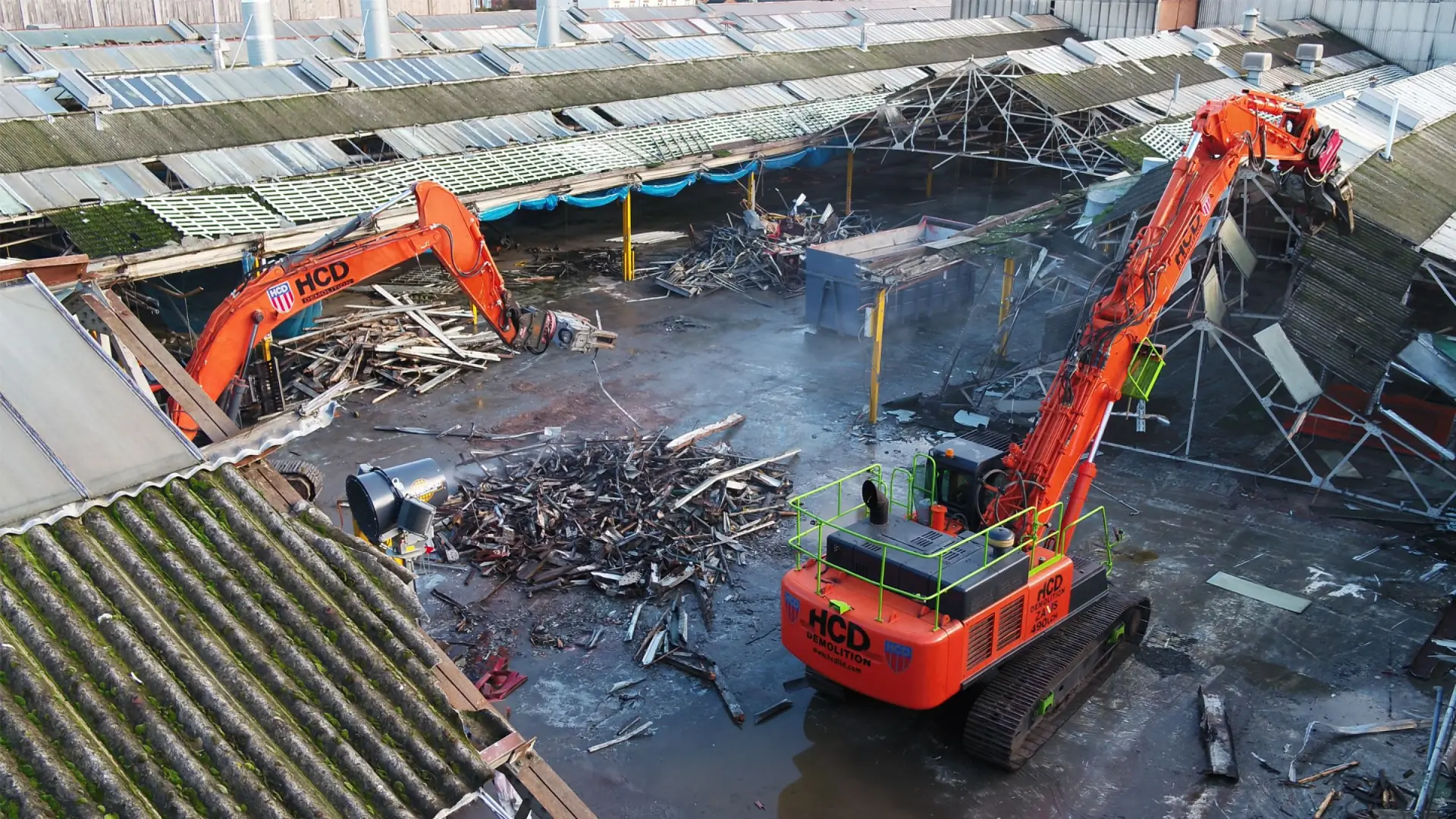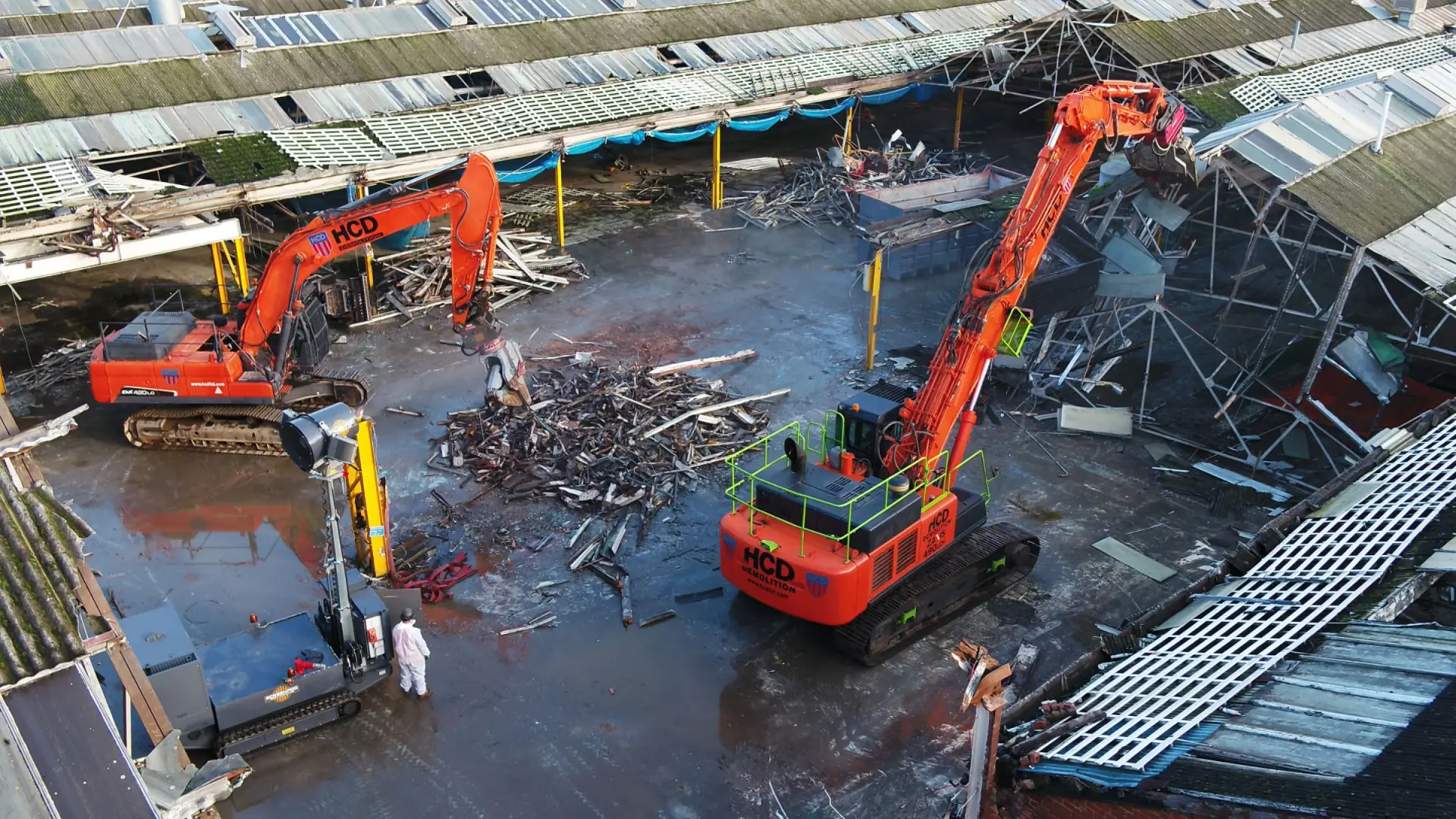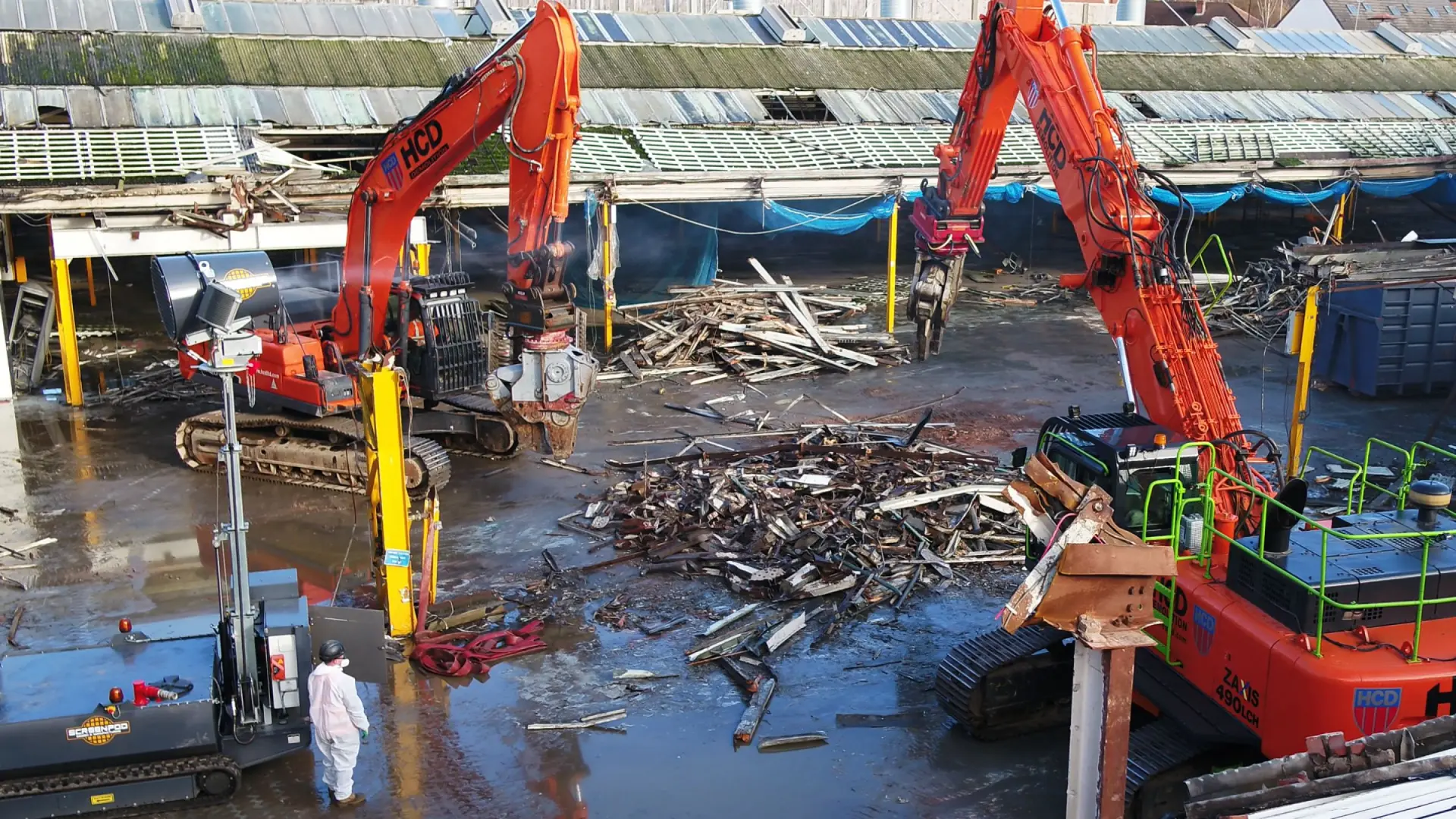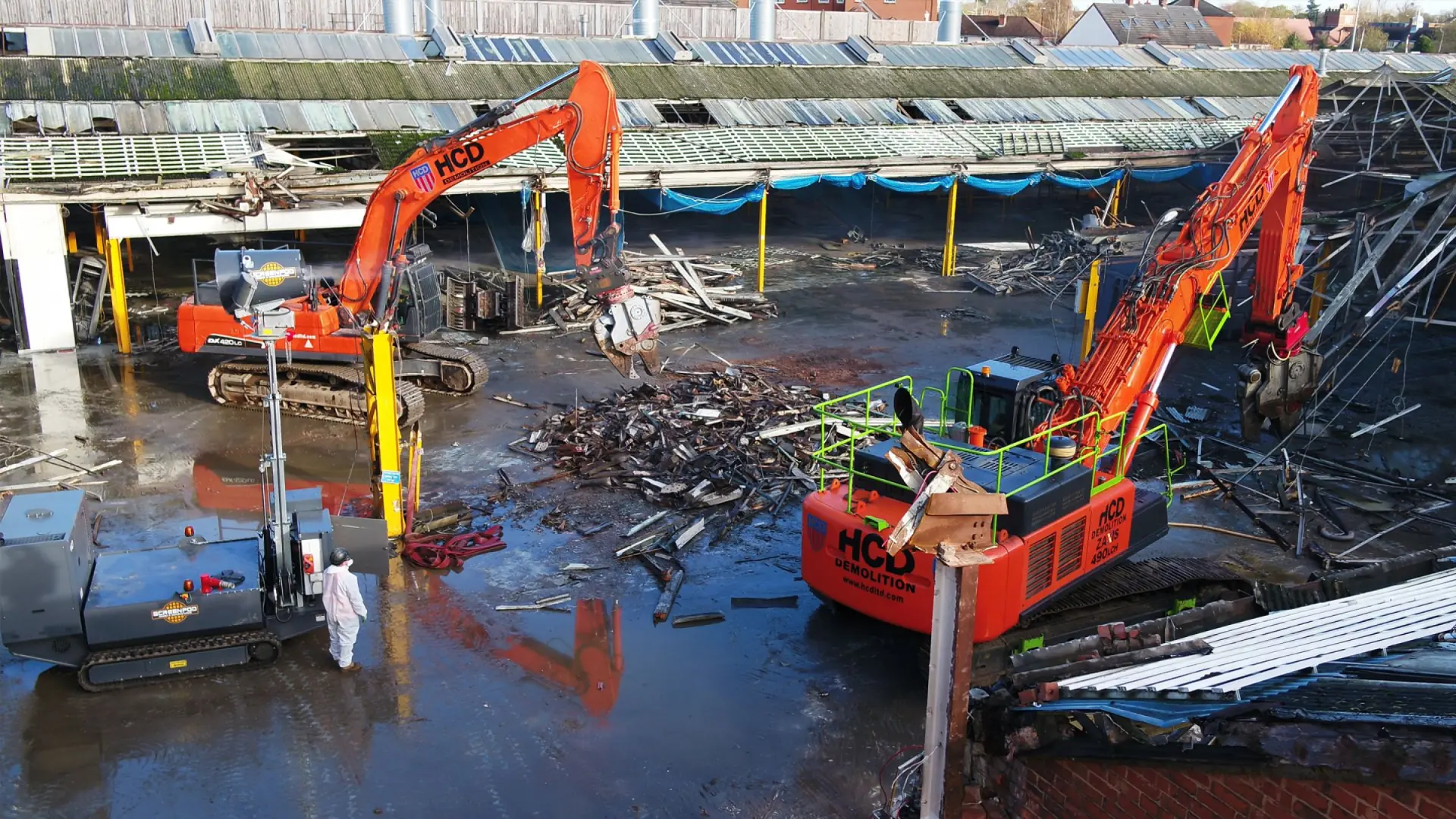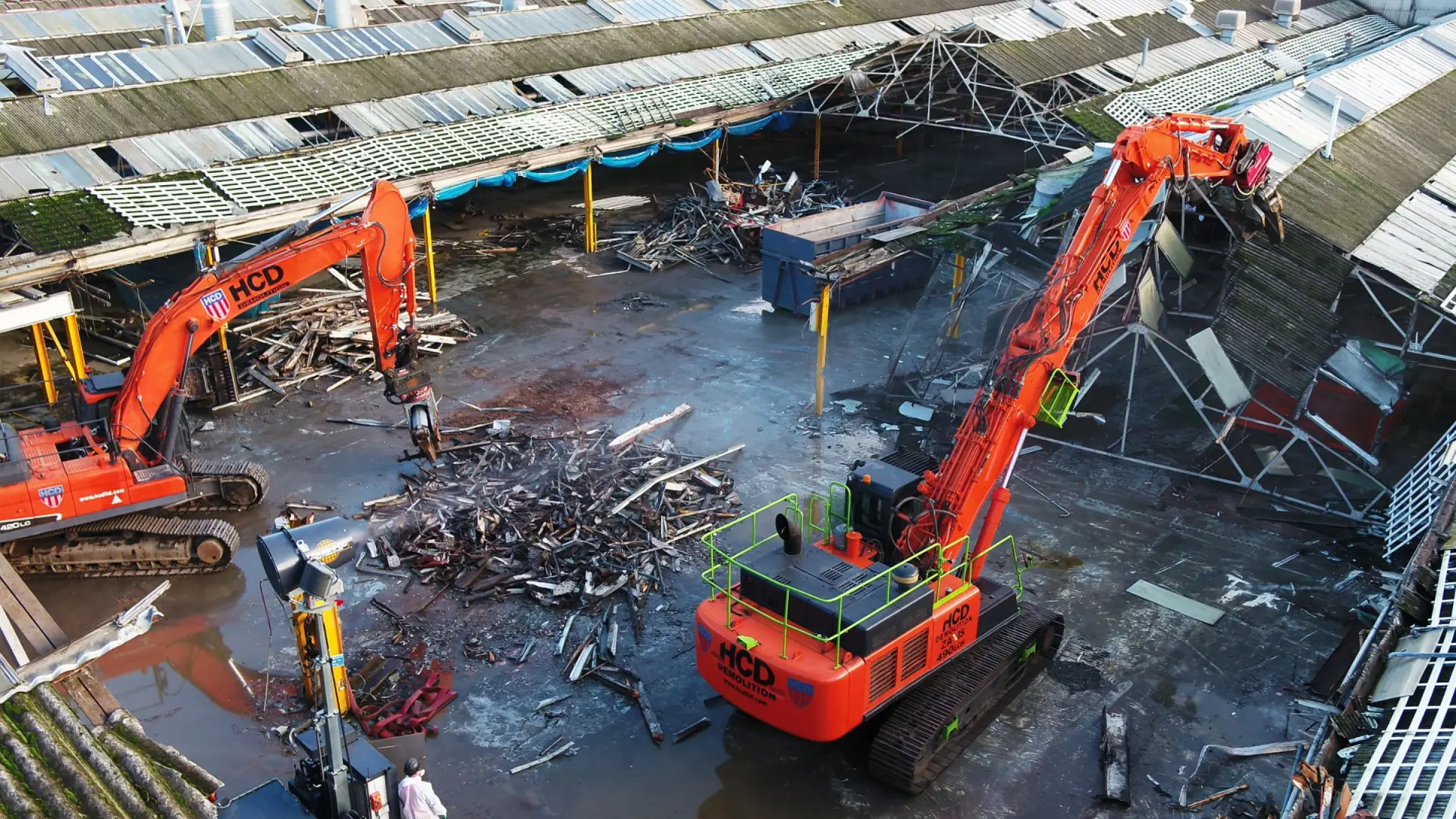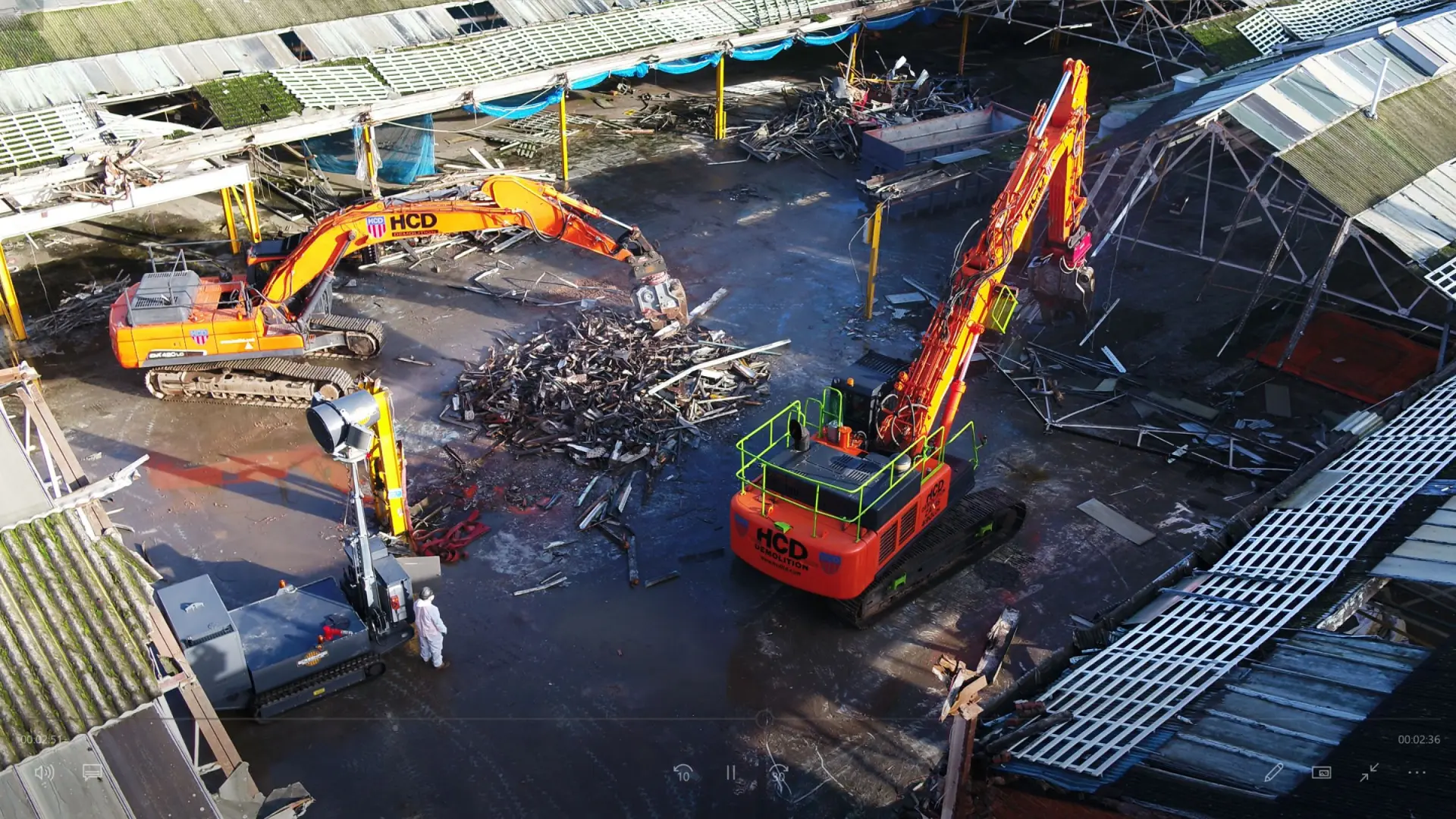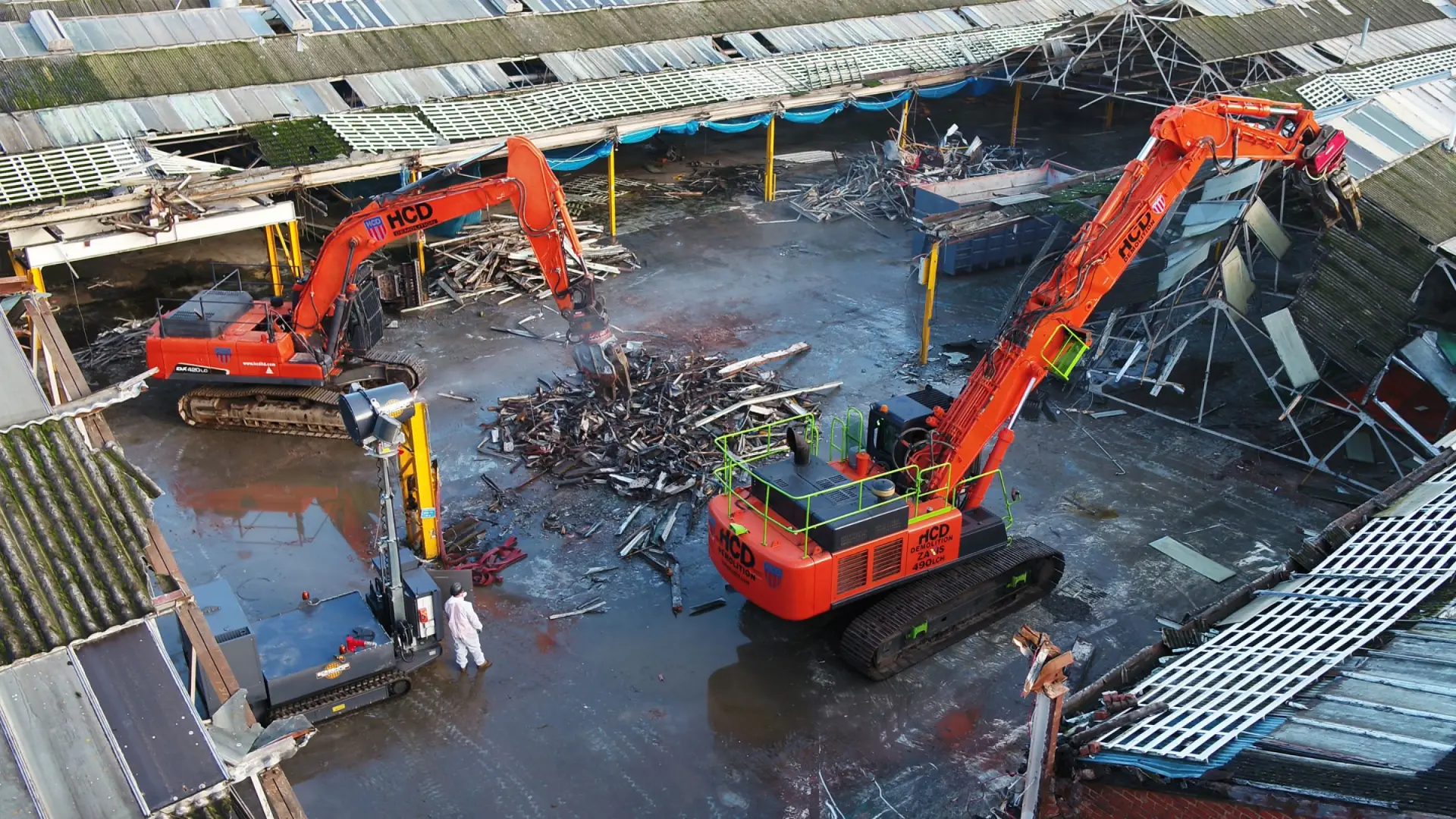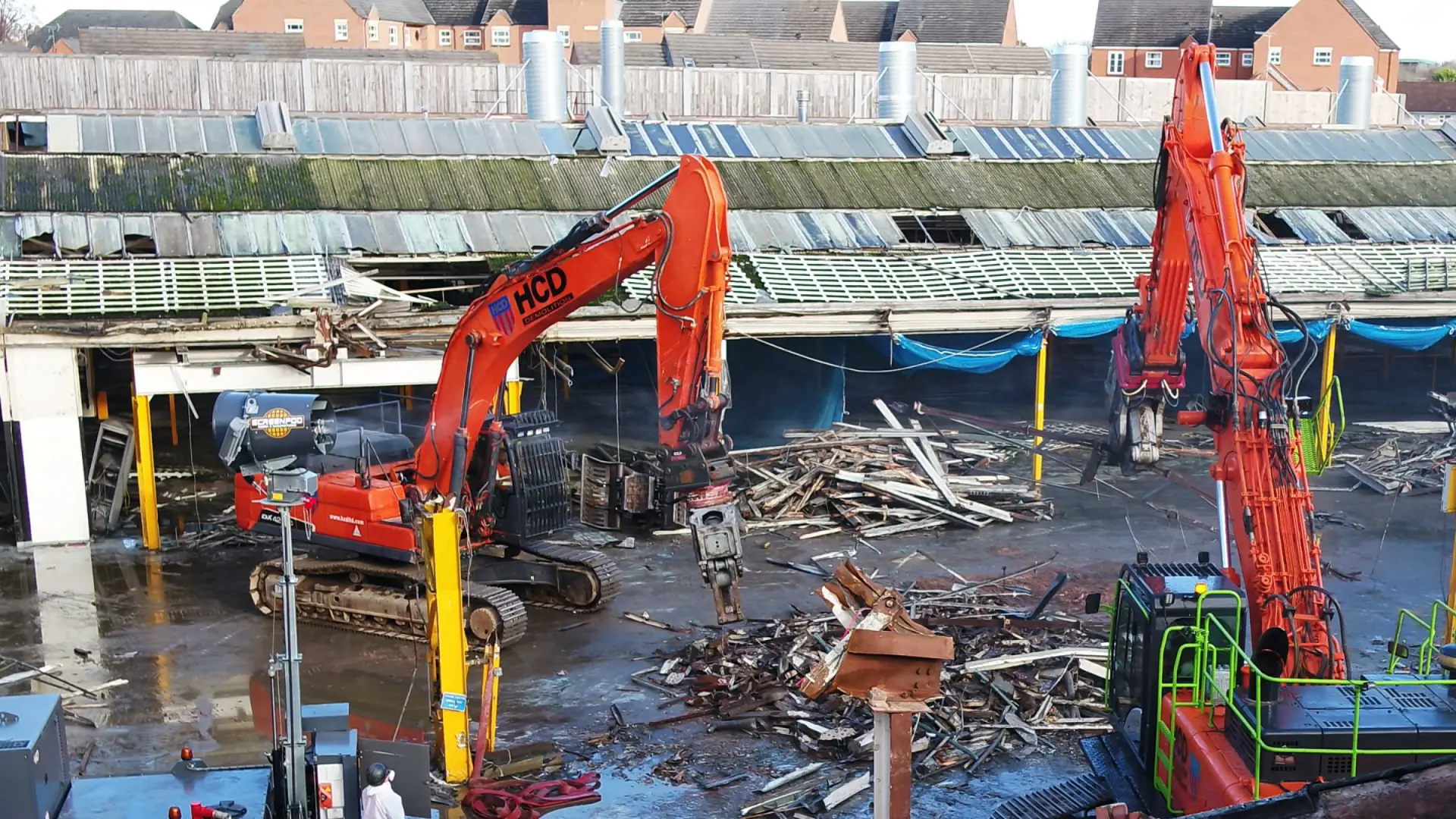
HCD Ltd undertook the demolition of the former London Taxi Factory on Holyhead Road, Coventry, preparing the site for a major residential redevelopment that will deliver hundreds of new homes.
The site was the historic home of Carbodies, one of Britain’s most recognised automotive manufacturers and the company synonymous with the iconic London black cab. Following the relocation of taxi production to a new facility at Ansty in 2017, the former manufacturing complex became surplus to requirements, paving the way for redevelopment.
The project involved the careful demolition of a substantial industrial complex, removal of plant and machinery, and preparation of the site for its next phase of life as a residential community.
Carbodies was founded by Robert “Bobby” Jones in 1919 and initially specialised in coachbuilding and vehicle body manufacturing. During the Second World War, the company produced bodies for military vehicles before expanding its post-war operations into bespoke coachwork and convertible vehicle production.
The company became internationally recognised for its involvement in the manufacture of the iconic London Taxi FX4. From the late 1950s onwards, the Coventry factory played a key role in producing generations of London black cabs, remaining at the heart of taxi manufacturing until operations ceased and relocated in 2017.
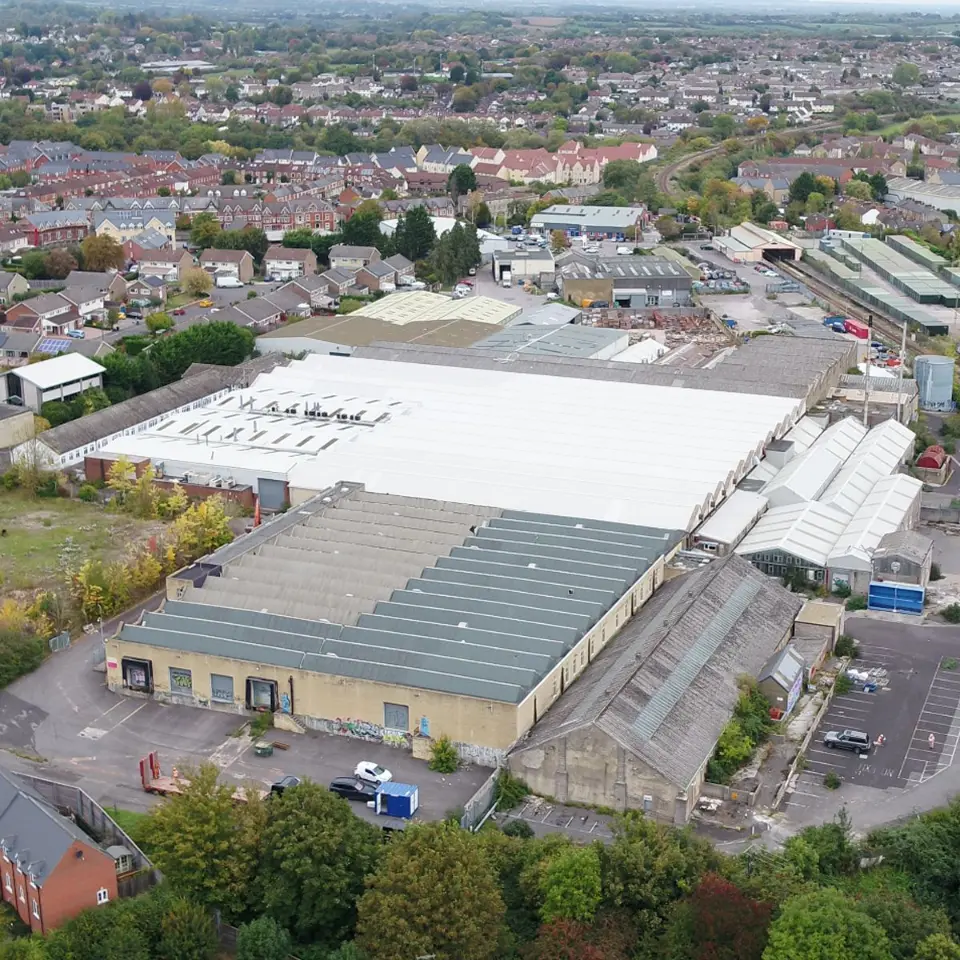
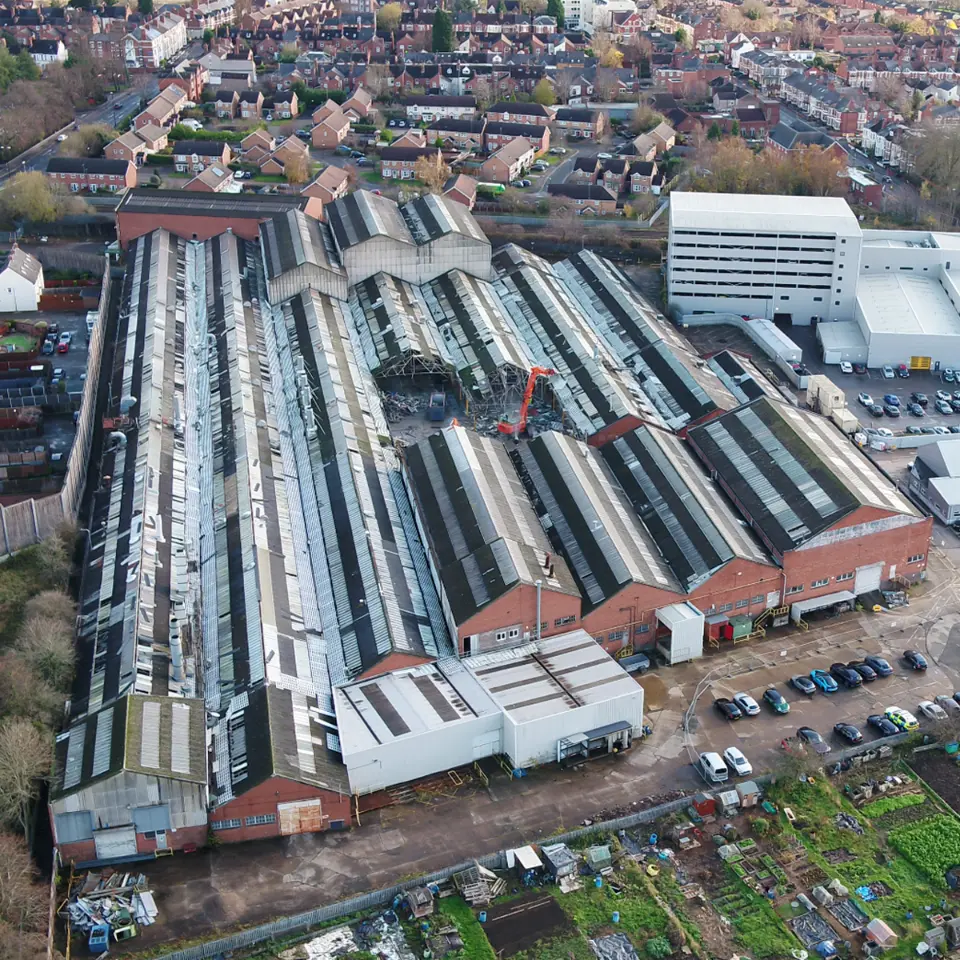
The former factory occupied a 1.93-hectare site within a predominantly residential area of Coventry.
Surrounded by suburban housing, allotment gardens and neighbouring commercial premises, the project required careful planning to minimise disruption to local residents and businesses. The industrial complex had developed over many decades and comprised a series of interconnected brick-built and steel-framed manufacturing sheds constructed between the late 1920s and the site’s closure.
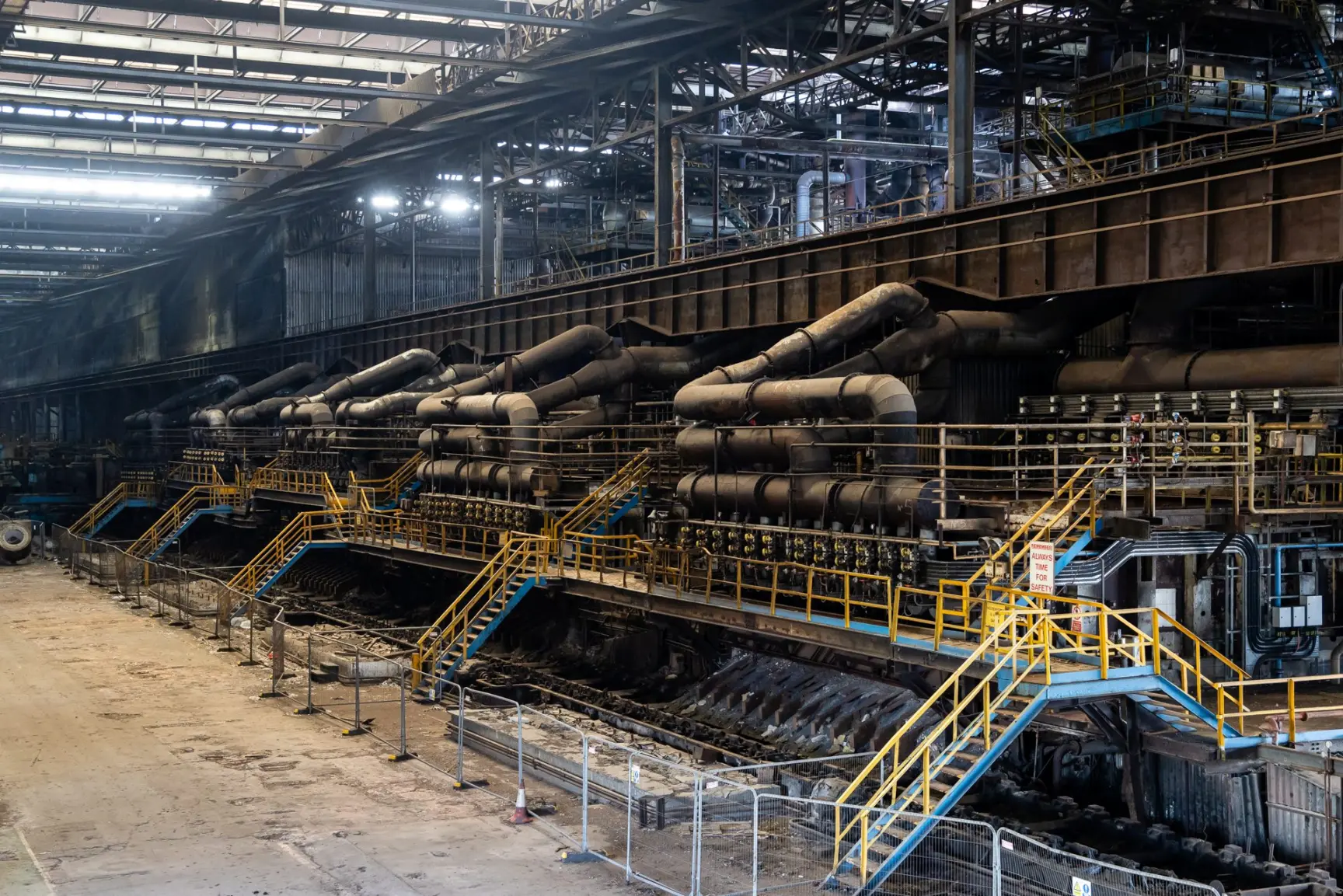
Many of the buildings had deteriorated significantly and contained extensive manufacturing infrastructure, including:
- Mechanical plant and machinery
- Process pipework
- Ventilation and extraction systems
- Industrial ductwork
- Cladding and insulation materials
- Structural steel frameworks
- Ancillary factory equipment
The age, scale and complexity of the buildings required a phased demolition strategy to ensure safety and efficiency throughout the programme.
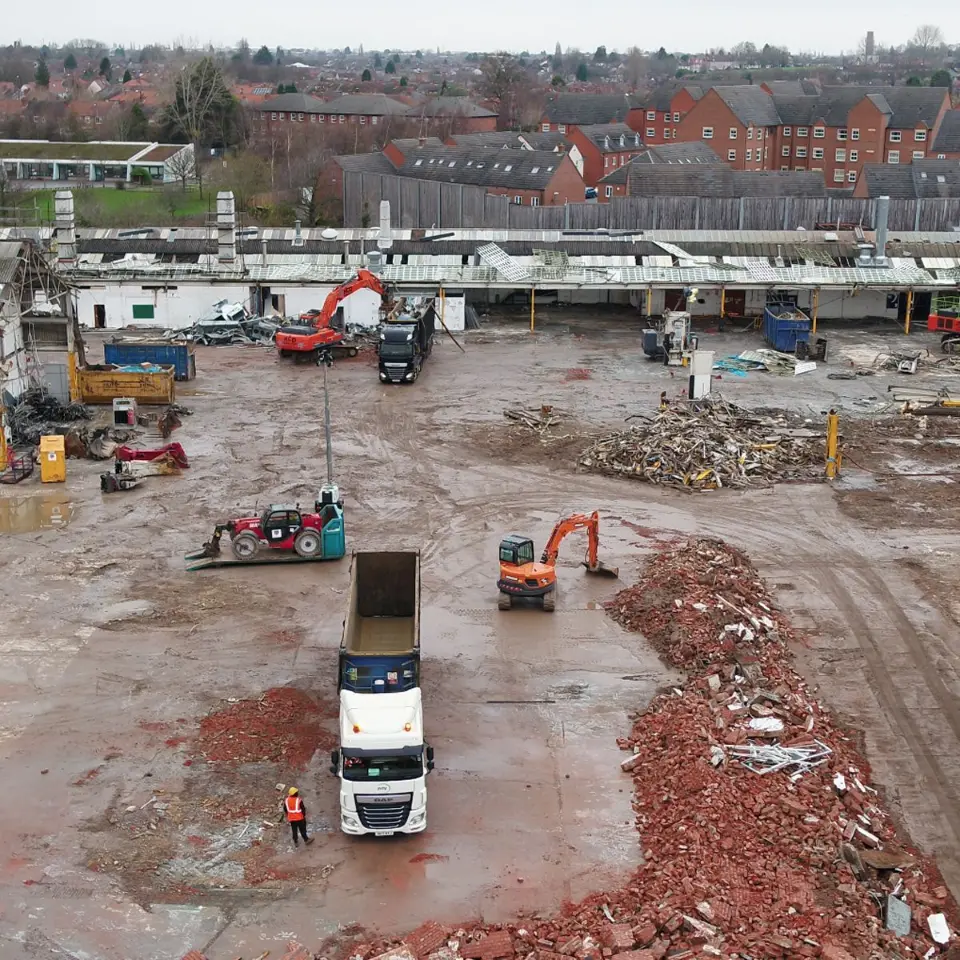
Given the site’s location close to residential properties and commercial neighbours, HCD implemented a carefully phased approach to the demolition works.
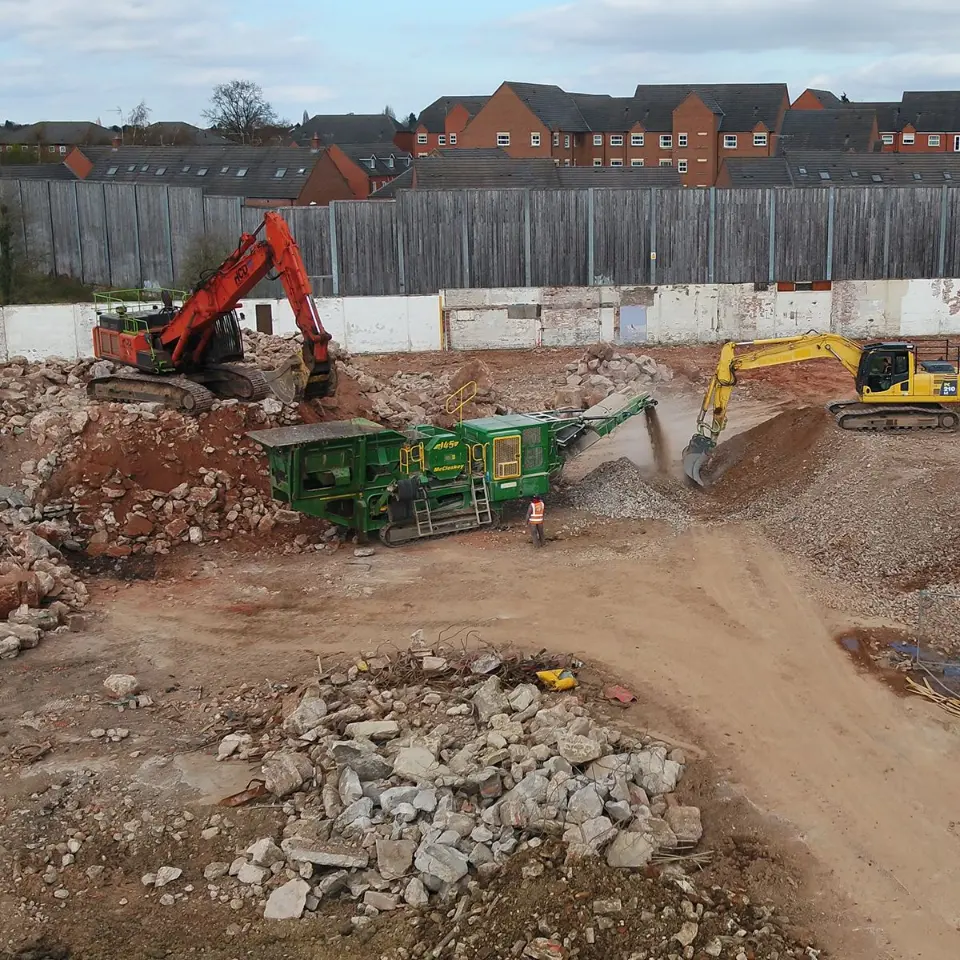
Extensive pre-demolition investigations were undertaken to identify structural considerations and ensure the safe removal of legacy manufacturing infrastructure. Soft strip operations were completed ahead of structural demolition, allowing materials to be segregated and recycled wherever possible.
The interconnected nature of the factory buildings required methodical sequencing to maintain structural stability throughout the demolition process. Dust suppression measures, noise management controls and ongoing communication with stakeholders helped minimise the impact of the works on surrounding residents, local businesses and allotment users.
The project team successfully navigated the complexities associated with dismantling nearly a century of industrial development while maintaining the highest standards of safety and environmental management.
HCD successfully demolished the former London Taxi Factory, transforming a redundant industrial site into a development-ready platform for a major housing-led regeneration scheme.